Pillar 2: Body
This is not about eating perfectly. It's about eating consciously and actually enjoying the process.
The Impact of What We Consume
Food is one of the most loaded topics in wellness culture, and if you've spent any time online in the health and fitness space, you already know just how overwhelming and contradictory the noise can get. Diets, trends, conflicting research, before and after photos, superfoods, elimination plans, intermittent fasting, clean eating, the list genuinely never ends and most of it is not actually serving you in any meaningful way.
This week isn't about any of that. It's about something much simpler and, in my opinion, much more powerful: learning to genuinely listen to your body and building a relationship with food that feels good rather than guilt-ridden, restrictive, obsessive, or chaotic.
Here's why this matters so much in the context of everything else we've been working on: what you eat directly affects how you think, how you feel, how much energy you have, and how well every other practice in this course actually works. Your meditation practice, your movement, your ability to regulate your emotions and show up for yourself consistently, all of it is impacted by what you're putting into your body. Food is fuel, not punishment, not reward, not something to white-knuckle your way through or feel ashamed about. Once you genuinely start approaching it from that perspective, so much shifts.
Intuitive Eating: Learning to Actually Listen
Intuitive eating is the practice of listening to your body's actual signals rather than following external rules about when, what, and how much to eat. In theory, it sounds straightforward. In practice, most of us have spent so many years overriding those signals that we've almost completely lost touch with them.
Think about how many of your eating habits are actually based on rules rather than genuine body awareness:
Eating three meals a day because that's just what you do, regardless of whether you're actually hungry at those times
Finishing everything on your plate because you were taught to, even when you're full
Reaching for food when you're bored, anxious, or procrastinating rather than physically hungry
Avoiding certain foods entirely because a diet told you to, even when your body genuinely craves them
Eating at certain times because it's scheduled, not because your body is asking for it
None of these habits are inherently terrible, and some of them might genuinely work well for you. But the practice of intuitive eating invites you to start questioning which of your food habits are actually serving your body and which ones are just running on autopilot.
Your body is sending clear messages constantly. It tells you when it's hungry and when it's full. It tells you when it wants something warm and grounding versus something light and fresh. It tells you when a certain food makes it feel energized and when another leaves it feeling sluggish an hour later. Learning to tune back into those signals takes time and genuine patience, but the more you practice it, the clearer those messages become.
A few things worth getting curious about this week:
Do you actually feel best with three meals a day, or does a different rhythm work better for your body?
Which foods genuinely give you sustained energy versus which ones create a spike and crash?
Are there times when you reach for food that aren't actually about physical hunger? And if so, what's actually going on in those moments?
What does your body feel like after different kinds of meals, an hour later, three hours later?
There are no universal right answers to any of these questions. Every single body is different, and the most valuable thing you can develop through this week is your own personal awareness rather than adherence to someone else's framework.
What a Healthy Relationship With Food Actually Looks Like
A healthy relationship with food is genuinely not about eating perfectly. It never was, and anyone telling you otherwise is probably trying to sell you something.
Here's what it actually looks like in practice:
Allowing yourself to eat things that bring you joy without spiraling into shame, guilt, or a punishing workout the next day. A piece of cake at a celebration and a nourishing home-cooked meal can both have a place in your life simultaneously. This is balance, and balance is the whole point.
Not following trends just because they're everywhere. Trendy diets and food fads come and go at an extraordinary pace, and the vast majority of them are not backed by solid science and are not designed with your individual body in mind. What works brilliantly for one person can be completely wrong for another.
Understanding that food affects you far beyond aesthetics. The ingredients you put into your body impact your energy levels, your mood, your digestion, your sleep quality, your hormonal balance, your mental clarity, and so much more. That connection is real and worth getting genuinely curious about, not in an obsessive way, but in a way that helps you understand your own body better.
Letting go of the all-or-nothing mentality. The idea that you've "ruined" a day of healthy eating with one indulgent meal and might as well give up entirely is one of the most counterproductive thought patterns that exists around food. One meal is one meal. It has no bearing on the next one.
Getting Curious About What You're Actually Eating
One of the most direct and genuinely empowering ways to take more control over how you feel is to start getting a little more curious about what's actually in the food you're consuming regularly. Not in a fearful or obsessive way, but in the same spirit of curiosity and self-awareness we've been cultivating throughout this entire course.
A few places to start:
Read ingredient labels on the things you buy regularly. Not to fear everything processed or to make yourself feel guilty, but just to understand what you're actually consuming. The ingredients list tells you so much more than the front of the packaging does.
Look into the benefits of whole ingredients that genuinely interest you. Ginger, garlic, turmeric, leafy greens, fermented foods, there is a genuinely fascinating amount of research on how specific whole foods affect the body and mind. YouTube is an incredible free resource for this kind of exploration.
Look into what's available locally to you: farmers markets, local shops, seasonal produce, and independent grocers. Food that hasn't traveled as far and hasn't been processed as heavily tends to make a noticeable difference in how you feel, and there's something genuinely grounding about knowing where your food comes from.
Pay attention to how you feel after consuming different things. Your body is giving you real-time feedback constantly, and developing the habit of actually noticing it is one of the most valuable things you can do.
Playing in the Kitchen
Here's something about cooking that often gets overlooked: it is one of the most naturally mindful activities that exists. It requires your full presence, it engages all of your senses simultaneously, it's creative, and it produces something tangible and nourishing at the end. It's also a place where perfectionism has absolutely no business being.
If your relationship with cooking has historically been stressful, obligatory, or non-existent, this week is an invitation to approach it completely differently. Not as a chore, not as a performance, but as a genuine act of care for yourself and an opportunity to play.
Some ways to make cooking feel more like exploration and less like an obligation:
Look up a recipe that uses an ingredient you've never cooked with before and just try it
Explore a cuisine that's completely new to you, a different culture's approach to flavor and ingredients
Open your fridge and cupboards and challenge yourself to make something nourishing from what you already have, without a specific recipe
Invite a friend or family member to cook with you, because cooking together is one of the more underrated ways to connect with someone you care about
Put on music you love, pour yourself something nice, and let the process actually be enjoyable rather than something to get through as quickly as possible
You genuinely do not need to be a good cook for this to be valuable. You just need to be willing to show up in the kitchen with curiosity rather than pressure.
Expressing Gratitude for Your Food
This might sound a little out there if you haven't encountered it before, but bear with me because it genuinely changes the quality of the experience.
After a mindful meal this week, take just a moment to express some gratitude for what you just consumed. Not in a performative or ritualistic way if that doesn't resonate, but just a quiet acknowledgment of the fact that your body just received nourishment, that the food on your plate traveled some kind of journey to get to you, and that you took the time to actually pay attention to it. This small practice deepens the connection between you and what you're putting into your body, and over time, it shifts the entire energy around eating from something you just do automatically to something you engage with consciously.
Balance: The Whole Point
Let's be really clear about this because it deserves its own moment: you are absolutely allowed to indulge in food that brings you pure joy without attaching guilt to it. A delicious meal at your favorite restaurant, a slice of your grandmother's cake, a bowl of something completely indulgent on a cozy night in, these things are part of your human experience, and they are meant to be enjoyed. Fully, unapologetically, and without immediately calculating how you'll compensate for it.
The goal of this week is not to transform your entire diet or eliminate anything. It's to bring more consciousness and genuine enjoyment to the way you eat, and to start building the kind of intuitive awareness that allows you to both nourish your body well and enjoy food deeply at the same time. Those two things are not in conflict with each other. Balance means holding both, always.
Let's Get Started
-
Let's Get Started -
Your Weekly Practice
Daily Mini
Hopefully, your daily morning practice is well-established by now. Keep it going!
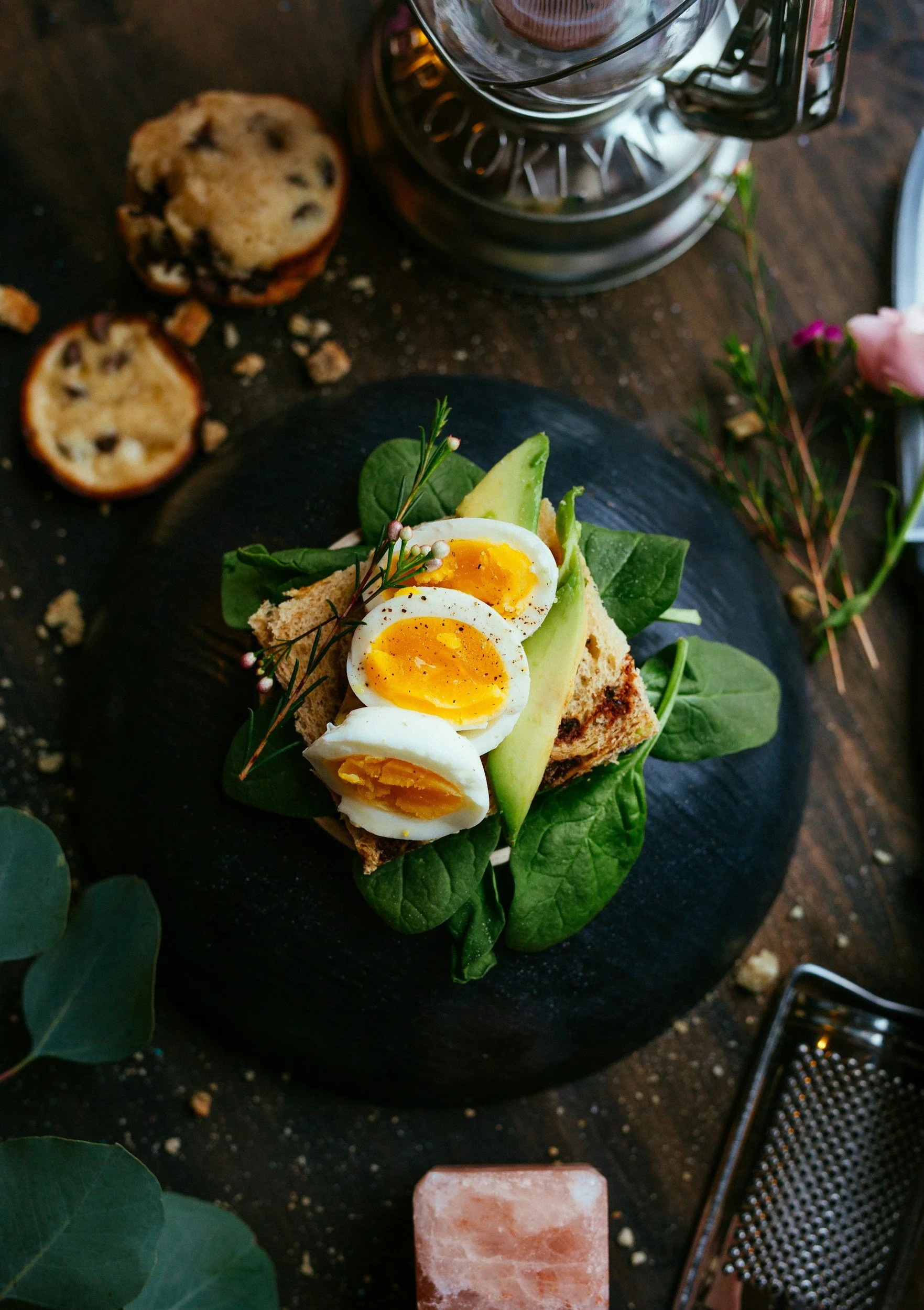
Have at least one genuinely mindful meal each day this week. Ideally, one that you've cooked yourself, but the mindfulness is the priority over the cooking if you can only choose one. Here's what a mindful meal actually looks like in practice:
Put your phone away and remove other distractions while you eat
Before you start, take a breath and acknowledge what you're about to consume
Eat slowly enough to actually taste what you're eating
Notice the ingredients as you eat them and think briefly about what they're doing for your body. If you don't know, look it up afterward out of genuine curiosity
Notice when you're actually full, rather than eating past that point out of habit
After you finish, take a moment to express quiet gratitude for the nourishment
Extend this same consciousness to what you drink throughout the day, too. Hydration matters enormously, and the quality of what you consume in liquid form is just as relevant as what you eat.
Weekly Exploration Task
This week's main task has two connected parts.
Part One: The Conscious Grocery Shop
Before your next grocery shop this week, write down the items you typically buy on a regular basis. Then, at the shop, pick up each one and actually read the label rather than just grabbing it automatically. Consider what you're getting from it nutritionally, and if it's more of a soul food than a nutritious one, acknowledge that honestly and without guilt. Both have a place.
As you go through the shop, try the following:
Pick out one ingredient you've never cooked with before and commit to using it this week
Write down the most unfamiliar or strange-sounding ingredient you find on any label and look it up when you get home. YouTube is great for this; you can find genuinely fascinating content about how processed ingredients are made and what they actually do in the body
If there's a local market, independent grocer, or farmers market accessible to you, make one stop there this week instead of defaulting entirely to your usual supermarket. Even just to look around and see what's available
Part Two: Cook Something With Intention
At some point this week, cook at least one meal with genuine intention and presence. Use the mindful cooking approach described above. If you're not sure what to make, look into what your body has been genuinely craving and start there. Open your fridge and cupboards and see what you already have to work with before automatically going to buy more ingredients. Challenge yourself with a new cuisine or a new technique if that excites you.
If you can involve someone else in the cooking process, even better. Ask a family member or friend to join you. Make it a shared experience rather than a solitary task.
Check back here mid-week if food guilt or old diet mentality starts creeping in. Reread the balance section. This is genuinely not about restriction, perfection, or transformation. It's about curiosity, consciousness, and care, and those things are meant to feel good.
A Note to Come Back To
Balance is the word that runs through this entire pillar and this entire lesson. You are allowed to enjoy food deeply, fully, and without apology. You are also allowed and encouraged to take care of your body with genuine intention and curiosity. These things are not in conflict with each other, and finding the place where they coexist naturally is one of the most freeing things you'll do on this journey. Keep listening to your body, because it genuinely knows what it needs. Your job is just to start paying attention.
-
Add a short summary or a list of helpful resources here.