Pillar 3: Soul
The outcomes throughout your life are oftentimes determined by the habits you maintain.
Sustainable Practices and Routines
Welcome to the Soul pillar. Over the last eight weeks, you've built a genuinely significant foundation across your mind and your body, and now we move into the deepest layer of this work. The soul pillar is where everything starts to come together and become less about individual practices and more about the way you live your life as a whole.
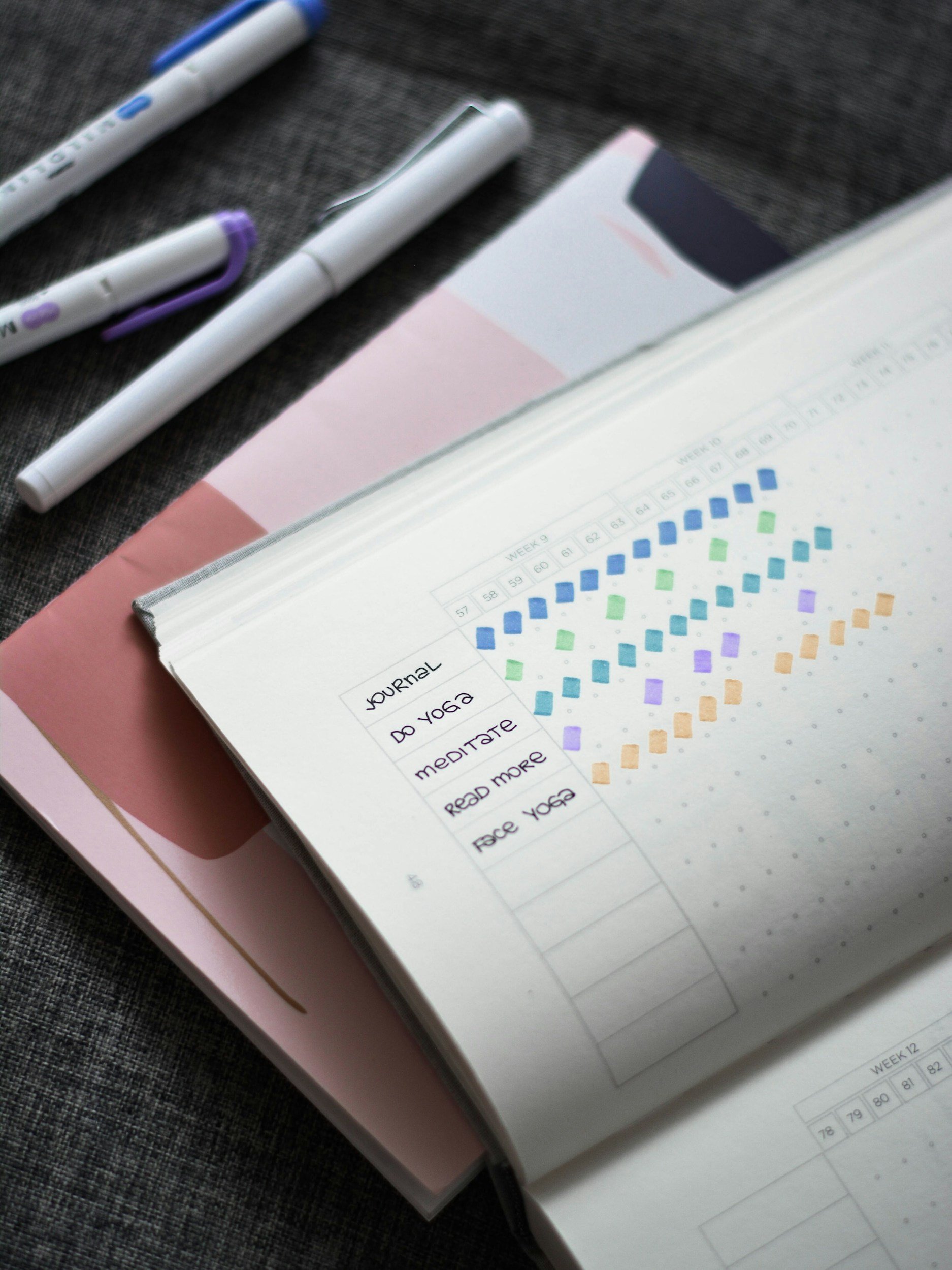
We're starting this pillar with habits, and there's a very intentional reason for that. All of the practices you've been introduced to so far, the meditation, the gratitude, the mindfulness, the movement, the yoga, the conscious eating, the time in nature, none of them become truly transformative in isolation or done sporadically whenever you happen to feel motivated. They become transformative when they become part of how you consistently live. And that's what a habit actually is. Not a rigid rule or a punishing discipline, but a practice that has become such a natural part of your life that not doing it starts to feel stranger than doing it.
This week is about understanding how habits actually form, building ones that genuinely stick, discovering the role that hobbies and creativity play in your overall wellbeing, and taking an honest look at the way you show up in the online world. All of it feeds into the same underlying goal: creating a daily life that consistently supports the person you're becoming rather than pulling you away from her.
How Habits Actually Form
Most people approach habit formation completely backwards, and then conclude that they're just not disciplined enough when things inevitably fall apart. But the failure almost never comes from a lack of discipline. It comes from a flawed strategy, and once you understand how habits actually work, building them becomes so much more manageable.
Here's what the research and genuine lived experience both consistently show:
Start embarrassingly small
Seriously, smaller than you think makes sense. The goal in the early stages of building a new habit is not transformation; it's repetition. You are teaching your brain that this is simply something you do now, and the only way to do that is by actually doing it consistently, which means making it easy enough that you genuinely can't find a reason not to. Two minutes of journaling. One sun salutation. A single glass of water before your morning coffee. It feels almost too small to matter, and that's exactly the point. Once something feels genuinely automatic, you expand it. But you have to earn the expansion through consistency first.
Stack new habits onto existing ones
This is one of the most reliable and underused techniques for making new habits stick, and it's beautifully simple. You already have anchors in your day, things you do without thinking because they're so deeply established. Waking up, making coffee, brushing your teeth, sitting down after work, getting into bed at night. Attaching a new habit to one of these existing anchors means you never have to remember to do it separately because the existing habit becomes the trigger.
Some examples of how this might look in practice:
Meditate right after you make your morning coffee, before you do anything else
Write three things you're grateful for right before you turn your lamp off at night
Do five minutes of stretching immediately before your morning shower
Take a mindful breath and set an intention every time you sit down at your desk
Build up gradually and give yourself real time
Research consistently suggests it takes anywhere from two to eight weeks of consistent repetition for a behavior to start feeling genuinely automatic, and that range varies enormously depending on the complexity of the habit and the individual. The important thing to understand is that if something feels effortful and unnatural after a week, that doesn't mean it isn't working or that it's not right for you. It means you're still in the building phase, and that phase requires patience more than anything else. Once something clicks into place and starts feeling like just part of what you do, that's when you add to it or increase it.
Plan for imperfection
You will miss days. Life will get in the way. You'll have a hard week, and the whole structure will fall apart temporarily. This is not failure, it's just being human, and the only thing that matters when it happens is how quickly you come back rather than how perfectly you maintained the streak. Missing one day never derails a habit. Deciding that missing one day means you've failed and giving up entirely is what derails a habit. Come back the next day. Start again as many times as you need to. There is no limit on fresh starts.
Healthy Hobbies and the Importance of Creativity
Something that doesn't get nearly enough attention in personal development conversations is the profound and genuine value of enjoying your free time in ways that are actually nourishing, without a specific end-goal in mind, rather than “hustling” or doing something with a strict end-goal in mind (like money for a side hustle, a certain body for exercise, etc.).
Having hobbies, real ones that absorb your attention and light something up in you, is not a luxury or a frivolous use of time. It's a fundamental part of taking care of yourself. And creativity in particular is one of the most powerful ways your mind processes, expresses, and genuinely restores itself. When you engage in something creative, you access parts of yourself that daily life and screen time tend to keep pretty dormant, and what comes through in those moments can be surprisingly meaningful.
Here's the really important thing about creativity as a practice: you do not need to be talented at something for it to be genuinely valuable to you. In fact, doing something creative that you're not particularly skilled at is one of the most freeing and joyful things you can do, because it completely removes the pressure of performance and just lets you play. The goal is engagement, presence, and self-expression, not a finished product worth showing anyone.
Think about what you've been genuinely curious about but have never made the time or given yourself permission to try. A craft, a musical instrument gathering dust in a corner somewhere, baking, writing, drawing, poetry, photography, learning a technical skill, ceramics, macramé, embroidery, creative writing, learning a language. The barrier to learning almost anything has genuinely never been lower than it is right now. YouTube alone contains hundreds of hours of free, high-quality instruction on virtually any skill imaginable, and the ability to teach yourself something from scratch at home is an extraordinary resource that most people massively underutilize.
If you know someone who does something you've always wanted to try, reach out and ask them to show you. Most people are genuinely delighted to share something they're passionate about, and learning a skill directly from someone you already care about adds a whole additional dimension to the experience.
A few categories of creative and hobby-based activities worth exploring if you're not sure where to start:
Creative and artistic:
Painting, drawing, sketching, or coloring
Creative writing, journaling, or poetry
Photography or film
Ceramics, pottery, or sculpting
Macramé, knitting, embroidering, or other fiber arts
Musical:
Learning an instrument that you have access to at home
Singing, even just for yourself
Music production or beat-making if that interests you
Technical and skill-based:
Learning basic coding or a software skill
Graphic design
A new language
Cooking or baking as a creative practice rather than just a daily necessity
Active and experiential:
Dance in any form
Gardening or tending to plants
Any sport or physical activity you've been curious about
The list is genuinely endless. Give yourself permission to play around and find what actually excites you rather than what seems most productive or impressive.
Healthy Online Habits
While we're talking about how you spend your time and attention, it's worth addressing the place where most of us spend more of it than anywhere else without fully realizing it: social media and the online world more broadly.
This isn't about quitting social media or developing a complicated guilt relationship with it. It genuinely has real value, real connection, real community, and real joy available within it. But the difference between using it consciously and being used by it without realizing is enormous, and worth paying attention to.
The social media purge
Go through the accounts you follow across every platform you use, and be genuinely honest about how each one makes you feel. Not intellectually, not based on whether they seem like good people or create quality content, but in your body. Does following this account leave you feeling inspired, energized, and genuinely good? Or does it quietly leave you feeling like you're not enough, like your life is somehow less than, like you're behind on something, like you need something you don't currently have?
Unfollow anything that consistently creates that second feeling, without guilt and without explanation. That's not a judgment of the person or the account. It's simply self-awareness and self-respect in action.
Rebuilding your feed with intention
After the purge comes the equally important opposite step: actively seeking out and following accounts, communities, and creators that genuinely inspire you, excite you, and make you feel good about yourself and your life. Think about the categories that matter most to you right now and seek out voices in those spaces that resonate authentically.
Some categories worth exploring:
Spiritual and inner growth
Physical health and movement
Mental health and emotional well-being
Conscious living and sustainability
Creativity and artistic inspiration
Personal development and mindset
Whatever specific topics and interests genuinely light you up
The energetic shift from comparison to celebration
This one takes real and consistent practice, but it's genuinely one of the most transformative shifts you can make in how you experience the online world. When you see someone doing something incredible, building a business, traveling somewhere beautiful, or achieving something you want for yourself, notice your first instinct. Is it comparison or is it genuine celebration?
Comparison contracts you. It pulls your energy inward and downward and makes what you have feel like less. Genuine excitement for others, real celebration of what they've created or achieved, expands you. It opens something up rather than closing it down. And here's the thing: what you put out energetically, the frequency you consistently vibrate at, is what you attract back into your own life. That's not just a spiritual idea, it's something you'll feel the truth of more and more as you continue doing this work.
Let's Get Started
-
Let's Get Started -
Your Weekly Practice
Daily Mini
Continue your morning practice. By this point in the course, it should be starting to feel less like a task you have to remember and more like something that's just part of how you start your day. If it still feels effortful and easy to skip, revisit the habit stacking section above and look at how you might anchor it more firmly to something already established in your morning.
The Seven-Day Challenge
This week, I want you to treat your daily practices as a genuine seven-day challenge. Not in a punishing or high-stakes way, but in a committed, intentional one. Choose the practices from throughout this course that have resonated most with you so far, combine them into a realistic daily structure that genuinely fits your life, and show up for that structure every single day this week without negotiating with yourself about it.
The point of the seven-day challenge isn't perfection. It's to give your chosen habits enough consecutive repetition that they start to build actual momentum, because momentum is what eventually transforms effort into ease.
Each day this week, show up for the combination of practices you've chosen without negotiating with yourself about whether you feel like it. Use the following structure as a starting point and adjust it to genuinely fit your life:
Morning:
Your established meditation and gratitude practice
A brief intention setting for the day
Movement of some kind, even if it's just a ten-minute stretch
Throughout the day:
At least one mindful meal
A moment of genuine presence outside if possible
One small action toward a creative hobby or learning something new
Evening:
Your self-appreciation list from Lesson 3
A brief reflection on how the day went, what felt aligned, and what didn't
Something genuinely restful and nourishing before sleep
This is a framework - take what works, leave what doesn't, and adjust as you go through the week.
Weekly Exploration Task
This week's main task is to do a thorough and honest social media audit and rebuild.
Work through these steps in whatever order feels natural:
Audit who you follow on every platform you use regularly. Be ruthlessly honest about how each account makes you actually feel in your body. Create a mental or written note of anything that consistently doesn't feel good.
Do the purge. Unfollow, mute, or hide anything that doesn't genuinely serve your highest self. This might feel uncomfortable if some of those accounts belong to people you know personally. Mute is always an option that creates distance without the social awkwardness of an unfollow.
Actively seek out and follow new accounts in categories that genuinely resonate with where you are and where you're going. Take your time with this step rather than rushing it. Quality over quantity.
Set some conscious boundaries around your online consumption for the rest of the week. This might look like:
Designating specific times of day for checking social media rather than constantly picking it up
Keeping your phone out of your bedroom entirely
Deleting certain apps from your phone and only accessing them on a computer
Setting screen time limits on your phone for specific apps
Simply deciding to be more conscious each time you reach for your phone about whether you actually want to be there, or whether it's just a habit
Check back here mid-week if the seven-day challenge is feeling overwhelming or like too much to maintain. Reread the section on starting embarrassingly small. Strip the daily practice back to its absolute minimum if you need to, and rebuild from there. The goal is consistency, not perfection, and a tiny practice done every single day this week is worth more than an elaborate one done twice.
A Note to Come Back To
Your habits are always in motion, either building the life you want or quietly drifting away from it. There's no neutral state. When things fall apart, and they will at some point because that's just the nature of a real human life, come back here. Start from the smallest possible version of the practice and build again. There is no limit on how many times you can begin again, and every single time you choose to come back, that choice itself is the practice.
-
Add a short summary or a list of helpful resources here.